
Durham Previous Residents by Era
Past residents leave different traces in different periods. Begin with the current parcel identifier, then choose the next source by date and purpose. A property record can identify the person listed as owner, but it does not identify everyone who lived there. A directory can print a household or business at an address, but it does not establish legal title. The table keeps those limits visible while building a Durham address history.
| Source | Years It Covers | Where Held | What It Shows |
|---|---|---|---|
| Parcel search and FAST GIS | Current portal and map layers; historic start not published | Durham Tax Administration | PIN/REID, owner display, situs and mailing address, parcel geometry, deed references |
| Register of Deeds instruments | County-era records from 1881; ordinary online portal start year not stated | Durham County Register of Deeds | Parties, date, instrument or book/page, and legal description |
| Directory street section | Generally 1919-1920 onward | Durham County Library and selected DigitalNC items | Dated address listing, household, or business context |
| Print directories and cross-reference books | 1892 examples; annual print from 1903; cross-reference from 1962 | North Carolina Collection | Alphabetical, address, telephone, and cross-reference clues |
| Sanborn maps | 1884-1950 | Library of Congress collection | Footprint, use, and street alignment, not a resident roster |
| Predecessor-county land records | Before 1881; some east Durham work before the 1911 transfer | Orange or Wake custody, depending on the place | Earlier deed, plat, or land-history lead |
The North Carolina county-records guide is a starting route for original and microfilm county series. It covers courts, elections, estates, land, marriage and vital statistics, military, roads, schools, taxes, and wills. Confirm the relevant Durham series before treating the guide as complete for a property.
The State Archives county-records guide is the source shown in this historical-custody view.
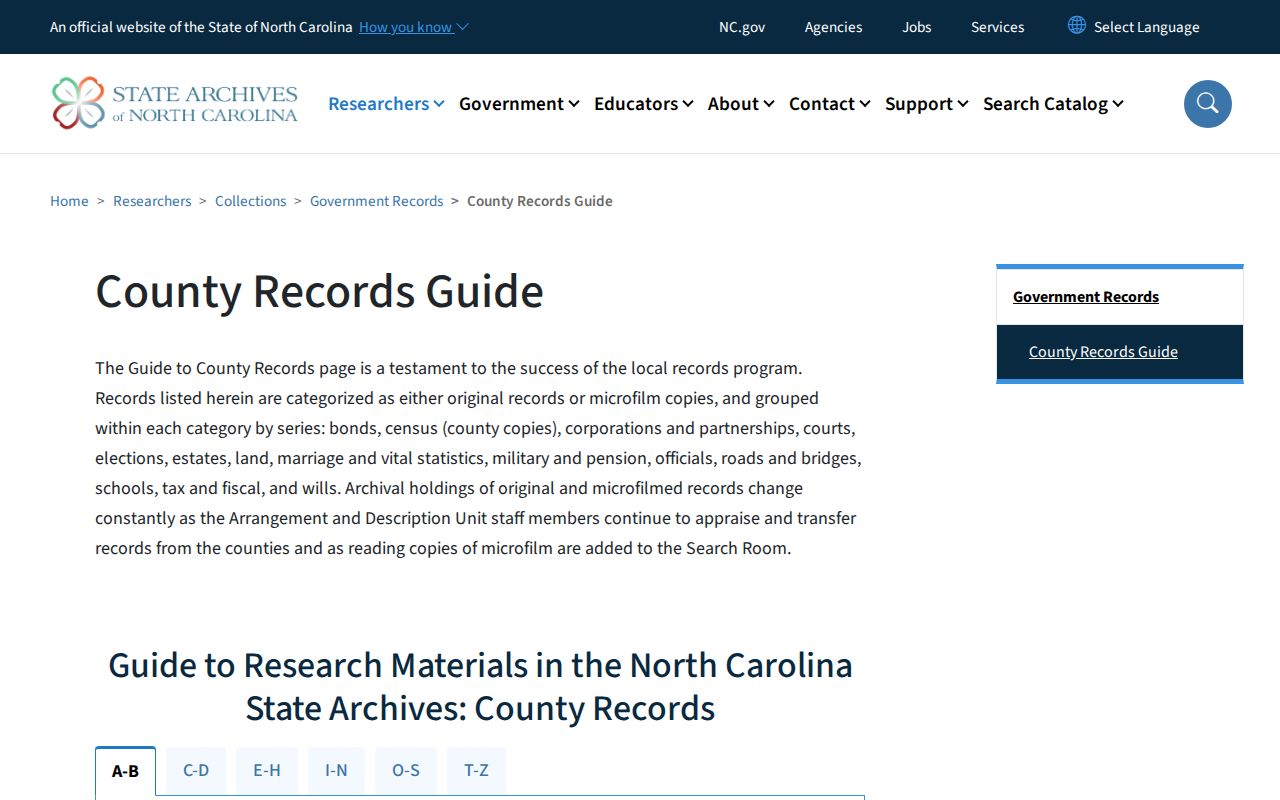
Use the guide to find the next custodian, then cite the actual record series, book, roll, page, or image that supplies a fact.
Start Durham Previous Residents With the Parcel
The Durham County Real Property Record Search can begin with a street number and street name. Record the parcel PIN or REID, situs address, owner display, mailing address, acreage, tax district, deed book and page, plat reference, and map geometry where shown. The situs is the mapped property location. A mailing address can belong to an estate, a bank, an attorney, or another tax contact. Neither field alone identifies who occupied the property.
FAST GIS adds address points, parcels, tax districts, municipal boundaries, and other layers. Its selection and data-table tools can help compare the current parcel with adjacent features, but a boundary relationship is not a social relationship. Keep the source date next to every field. Property data changes, and a current card may show a newer name than the recorded instrument that led to it.
For difficult previous-resident work, retain four columns in notes: owner, occupant, mail recipient, and source date. That simple separation prevents a modern tax entry from being rewritten as a historical household claim.
Note: A parcel PIN or REID is the strongest bridge between a current address display and the property’s recorded references.
Durham Deed Chain for Previous Residents
Use the parcel’s deed reference to reach the vesting instrument in the Durham County Register of Deeds online records route. Read the parties and legal description, then use the seller’s name as an earlier buyer search. This is a chain-of-title method, not a current-person search. Estate transfers, corrections, quitclaims, mergers, and other non-sale instruments must be labeled for what they are instead of treated as ordinary sales.
- Capture the current parcel PIN or REID, owner display, situs address, and deed or plat reference.
- Find the vesting deed and record its instrument number or book/page, recording date, parties, and legal description.
- Search the seller as a prior buyer, then identify that earlier instrument and repeat the process.
- Compare lot, block, subdivision, plat, metes-and-bounds, and nearby-tract clues whenever the street address changes.
- When the web result ends, write down the last successful reference and ask the Register of Deeds which counter, microfilm, paper, or excluded-book route follows.
- Grantor and grantee
- The grantor transfers an interest in the instrument. The grantee receives that interest. Their roles are specific to that document.
- Chain of title
- A documented sequence of recorded transfers traced backward through the property, not an automatic list of occupants.
- Legal description
- The lot, block, subdivision, metes-and-bounds, or plat-based land description used in the record. It can remain useful when a street name or number changes.
For an in-person or contact fallback, the Register of Deeds is at 201 E Main Street, second floor, Administration Building II, Durham, NC 27701. The research route lists 919-560-0480 and regdeeds@dconc.gov. Ask for an existing record, not a newly created title abstract.
Durham Previous Residents and Excluded Books
Durham’s online self-service disclaimer is the access boundary for a deed-chain search. Ordinary real-estate documents may be available through the portal, but Historical Record, Condo Books, Corporate Books, Mortgage Books, and Plat Books are excluded from ordinary online coverage. The county does not state a single starting year for normal online deed access. The 1881-1962 electronic-index effort is a history and priority clue, not a promise that every document from those years is visible online.
If a link stops, preserve the book/page, date, parties, and URL that worked. Then ask whether the next source is a historical record, excluded book, microfilm, or paper volume. The Register of Deeds self-service disclaimer is more reliable than guessing that a no-match means no record exists.
The Register of Deeds fee schedule separates recording and copy charges and is the source for this access reminder.
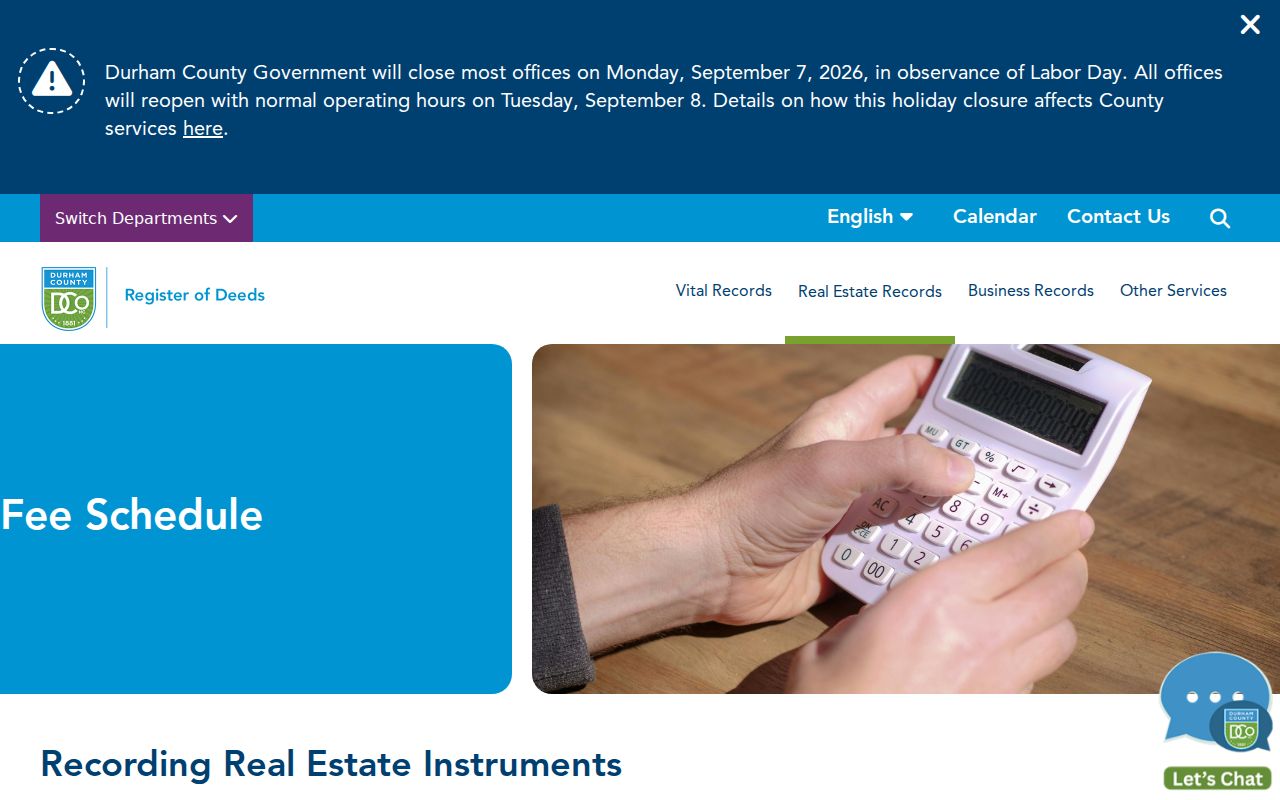
Check the current schedule before requesting copies, because a recording fee and a copy charge answer different questions.
Durham Previous Residents in Directories and Census
Ownership is only one part of a house history. A dated directory may identify a printed household or business at the address even when the deed names another party. Durham’s street sections generally begin around 1919-1920. For earlier years, use the alphabetical listing, then compare newspapers, deeds, maps, or tax material. Annual print directories reach back to 1903, with some 1892 examples, and Greater Durham cross-reference directories run from 1962 to the present.
Pair a directory date with the corresponding released federal census schedule under the 72-year public-access rule. Keep the dates distinct. A directory reflects its publication cycle; a census records its own enumeration date. The household trail is a process flow: address and dated directory entry, then street or cross-reference check, then released census context, then a newspaper, obituary, deed, or probate source for corroboration.
- Choose a directory year close to the address question and save the edition, page, section, and spelling.
- Read the alphabetical entry and, where the year permits, the street section for the same address.
- Move through nearby directory years, noting address changes, spouse forms, and gaps without assuming why a name vanishes.
- Compare the result with the released census schedule and keep source dates in separate fields.
- Close or qualify the trail with a deed, original newspaper item, cemetery source, or probate record when appropriate.
The collections themselves are described in the Durham city directory resource. Use that local shelf for the edition and access details rather than treating a reverse listing as a complete household record.
Lawful use. Durham previous-resident research is for house history, family history, estate questions, and personal curiosity. Do not use a dated address trail to harass, stalk, or track a living person.
Durham Previous Residents on Sanborn Maps
Sanborn fire-insurance maps help answer what stood at an address and how a street aligned at a given time. Durham sheets in the Library of Congress Sanborn collection cover 1884-1950. The August 1907 Durham set has 21 sheets. A sheet can show a footprint, building use, fire walls, and the street setting. It does not name every person who lived in the structure.
Use a map beside a directory and deed reference. If a street name, number, or footprint does not line up, record the discrepancy and test an older spelling or a map from another year. The mismatch may be a numbering change, a renamed or extended street, a changed building, or a different parcel description.
Durham Previous Residents Before County Formation
Durham County was created from Wake and Orange on April 17, 1881. That is a land-record custody breakpoint. Before 1881, the relevant deed office can be Orange or Wake depending on the place. A second breakpoint comes from the 1911 Wake land transfer. The library specifically notes that some east Durham land can require Wake research before the transfer. An address that appears to vanish from Durham’s books may need a predecessor-county search rather than a new spelling guess.
Durham County’s history supplies the county-formation context. The research does not support a courthouse-fire explanation for a missing Durham chain. Verify any claimed loss, reconstruction, flood, or courthouse event with the State Archives or a county archivist before relying on it.
Note: County formation and transfer dates are custody clues, not proof that every earlier parcel followed one identical record path.
Durham Past Residents in Notices and Indexes
When a directory or deed chain reaches an apparent endpoint, local indexes can point to a second source. Durham County Library’s obituary index covers 1848-1927. Its birth, marriage, and divorce announcement index reaches from the 1800s through 1911. These are finding aids. The original newspapers are on Main Library microfilm, and the library provides title abbreviations to help locate the item.
The North Carolina Collection also holds biography files, newspapers, yearbooks, maps, Urban Renewal records, and other local-history material. Digital Durham and Duke collections can add institutional or neighborhood context. Cite the page or image used and keep an uncertain name match labeled as uncertain. A record not found online can reflect an excluded book, older custody, a spelling variant, a restriction, or incomplete indexing.
The Durham County Library North Carolina Collection is the source shown for this local-history access route.
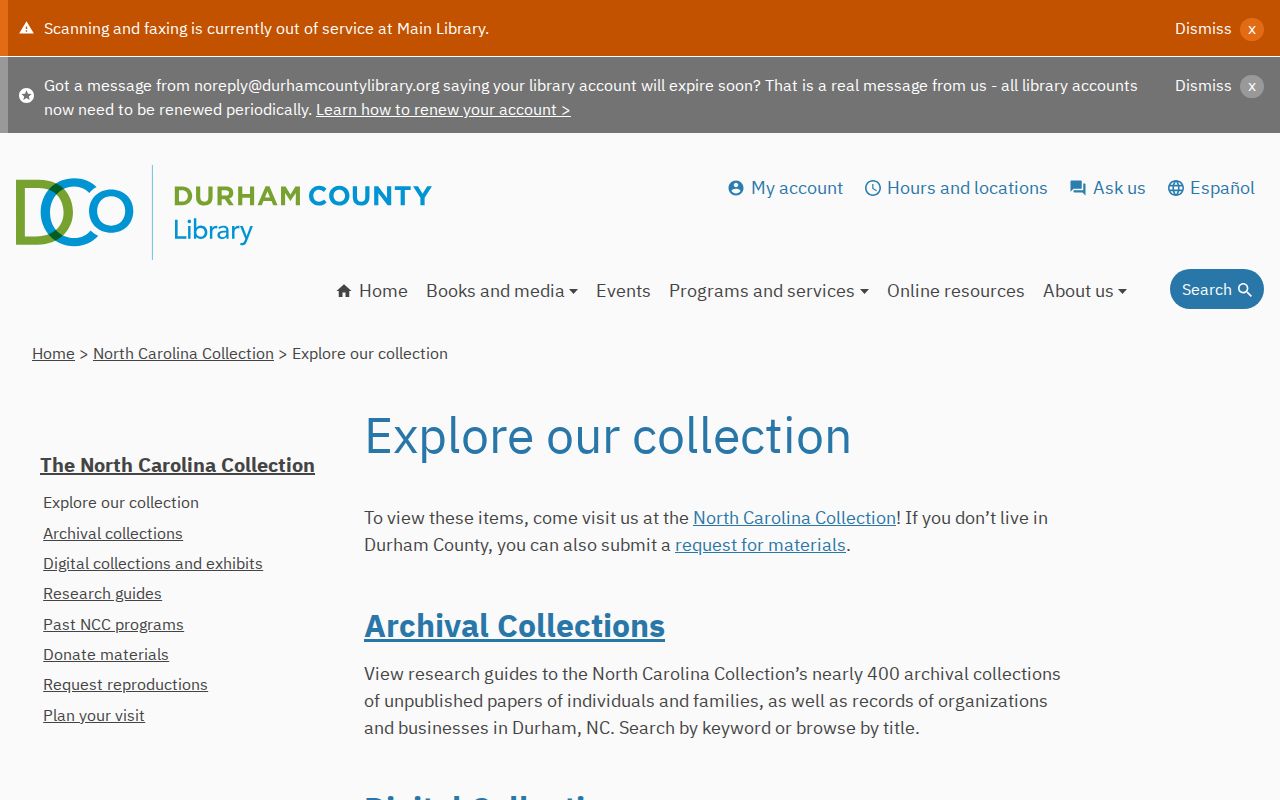
Library material can make an address history more complete, provided each finding keeps its date, source, and stated limit.