
Finding Durham Resident Records
Durham has no master roll of everyone who lives here. Each custodian keeps a narrower record for a separate public purpose. Tax Administration maintains parcel and tax information. The Register of Deeds maintains recorded instruments. The State Board of Elections has voter registration tools, and the Clerk of Superior Court holds county case files. A library directory can place someone at an address in a given year, but it does not prove present residence or legal title.
Choose a search based on the question. An address points to the parcel search and FAST GIS. A full name may fit voter, court, or archival directory resources. A family-history question usually needs a year before it needs a broad name query. Durham results become much more useful when the source, search date, and record number stay with the note.
- Use the Durham parcel search for an address, PIN, REID, or owner clue.
- Read the parcel card for a deed or plat reference, then check the recorded instrument through the Register of Deeds.
- Use the NC Voter Search for current registration information, not as an address browser.
- For a dated household, consult a Durham directory volume and preserve its year, page, and section.
- When an online record stops, request the existing item from the clerk, office, library, or archive that holds it.
Note: A missing web result can reflect a restricted file, a historical book, a spelling variant, or a different custodian rather than a confirmed absence.
Durham Resident Record Custodians
The useful Durham residents directory sources are divided among public offices. The Register of Deeds handles recorded land instruments and local vital-record issuance routes. Tax Administration supplies the property discovery layer. Elections manages local assistance for the state voter system. The Clerk is the custodian for Durham court files even when a statewide portal shows a summary. Each office can identify the right access channel, but none has to create a new combined profile from separate records.
Durham County Register of Deeds
201 E Main St, second floor
Durham, NC 27701
919-560-0480
Durham County Board of Elections
3825 S Roxboro St, Suite 101
Durham, NC 27713
919-560-0700
The Durham Clerk of Superior Court can be reached through the court contact directory. Its public counter, self-service terminal, and file-request route remain important when a Portal result is incomplete.
Durham Parcel Search Fields
Durham’s property search is a useful first stop for an address-based residents directory question. Its search-by controls accept Building Permit No, Parcel ID, Parcel PIN, street number, street name, unit number, first name, last name, and company name. The street fields work without a full postal address. A result can provide parcel identity, a tax-name display, situs and mailing clues, acreage, a tax district, and deed or plat references.
A tax name can be a trust, estate, business, or mailing contact. The county says that a tax-name change does not change the name on a deed. Read the recorded deed for the legal-title question, and keep owner, occupant, mail recipient, and source date as separate notes.
| Search field | Durham use |
|---|---|
| Street Number and Street Name | Optional address components for finding a parcel. |
| Parcel ID or Parcel PIN | Identifiers that connect a map result to land records. |
| First, Last, or Company Name | Tax-owner discovery inputs, not proof of occupancy. |
| Building Permit No | A route from a permit reference into parcel research. |
See the official parcel search before entering a Durham address. Its fields show why one careful query is more useful than an unsupported list of names.
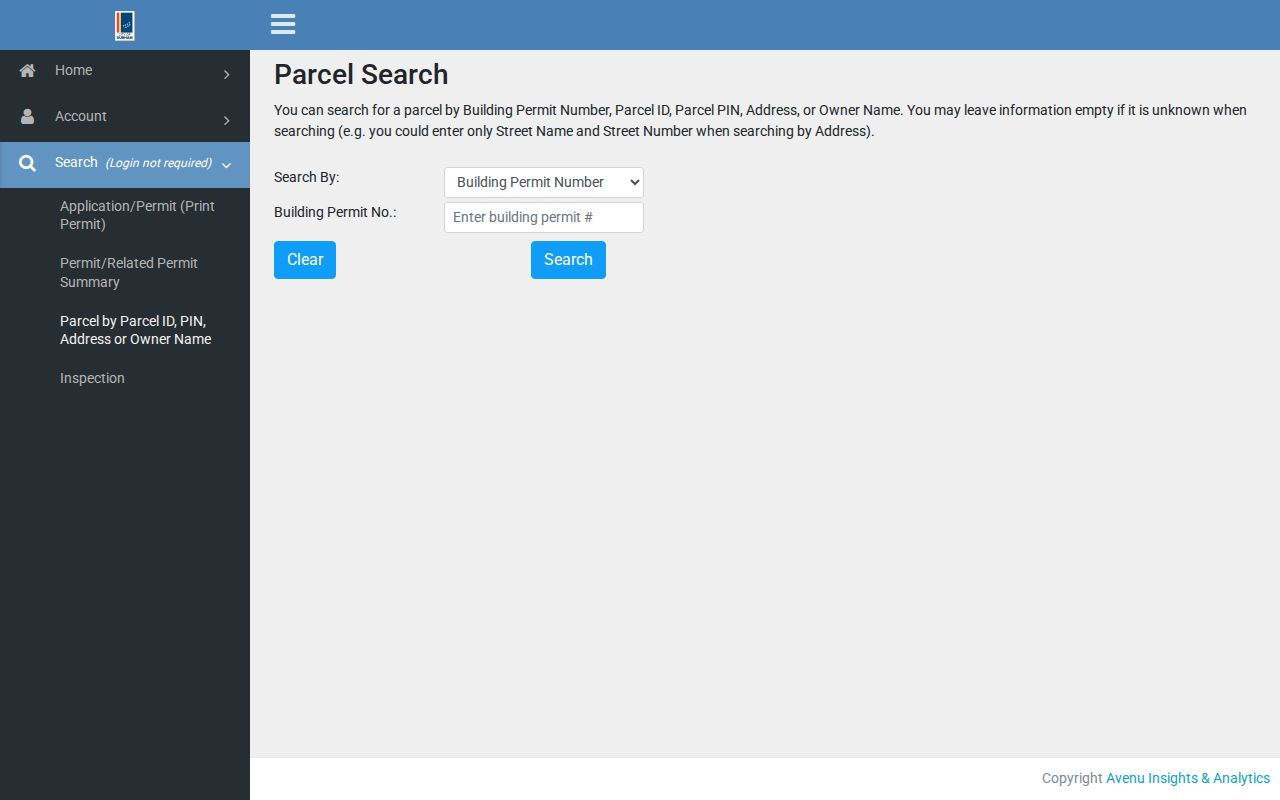
The parcel interface is the first link between a mapped Durham address and a recorded land trail.
Current Durham Residents Directory Sources
Current sources answer different questions. A parcel record identifies tax and land details. Voter resources describe registration status and jurisdiction subject to statutory privacy limits. The Register of Deeds index lists parties to recorded instruments. A City staff directory identifies public-facing department contacts. None of these sources should be read as a complete list of every person at an address.
| Durham source | Useful record | Custodian | Access path |
|---|---|---|---|
| Parcel and FAST GIS | Tax owner, parcel, situs, map and deed references | Tax Administration | Public search and map |
| Voter Search | Registration status, precinct and jurisdictions | NC SBE / County Board | State lookup and county assistance |
| Recorded instruments | Grantor, grantee, recording and legal-description trail | Register of Deeds | Portal, counter, phone, email or mail |
| City staff directory | Public-facing department contacts | City of Durham | Online contact search |
| Neighborhood associations | Public civic contacts and opt-in routes | City and associations | Association inventory and organization sites |
For a one-person question, the Durham resident lookup route keeps the sources separate and emphasizes matching identifiers instead of combining same-name results.
Durham Deed Index Limits
The Register of Deeds portal disclaimer is the access boundary for recorded land research. It describes ordinary real-estate documents as available online while excluding Historical Record, Condo Books, Corporate Books, Mortgage Books, and Plat Books. Images can be temporarily unavailable during maintenance. The current official material does not give one reliable historical start year for the live index.
Historic plat books may appear in split A/B volumes. For an excluded item, use the Register of Deeds counter, phone or email guidance, a mail copy request, and the fee schedule instead of assuming the record does not exist. This matters because Durham County formed in 1881, and land in the later 1911 Wake transfer can require earlier Wake research.
Note: The county’s digitization history is useful context, but it does not guarantee that a particular early document is searchable online today.
The official online records route identifies the correct custodian before a deed query begins.
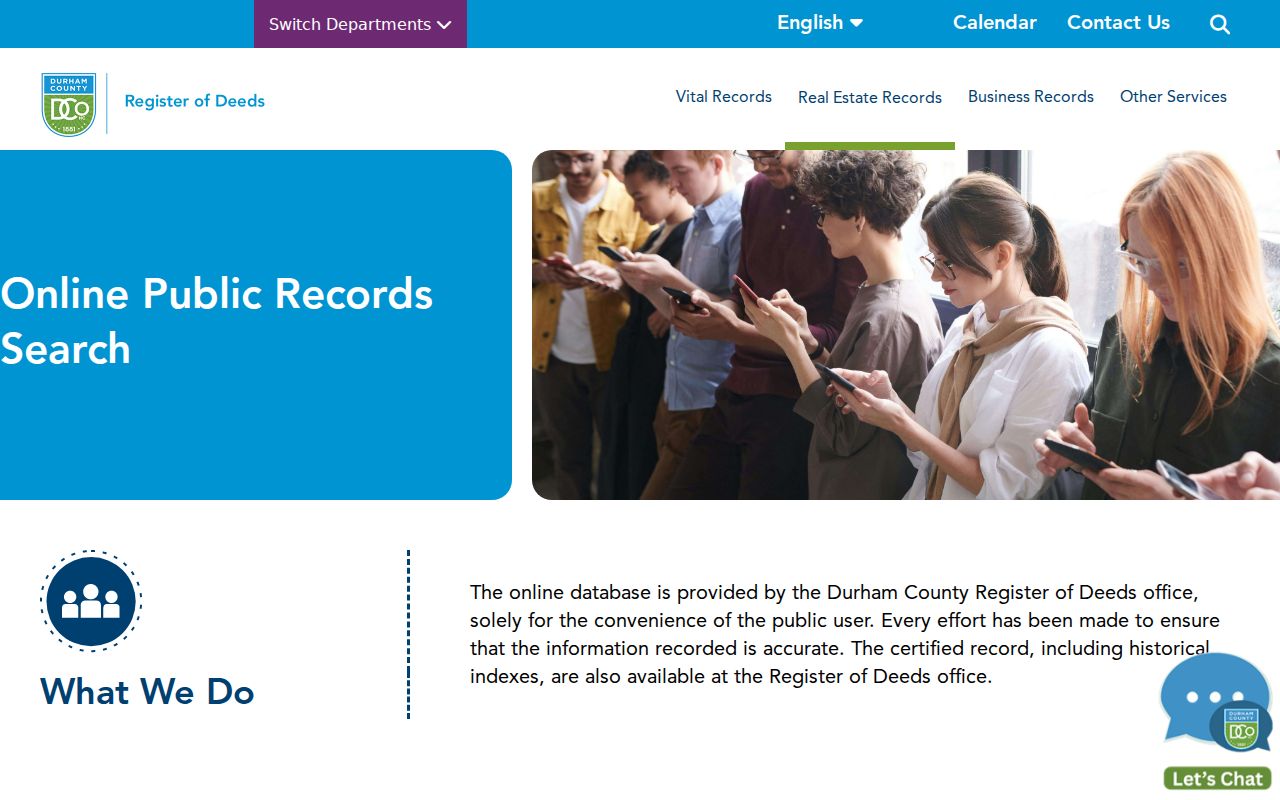
Reading the portal’s coverage notice first prevents an online gap from being mistaken for a missing Durham land record.
Durham Voter Record Boundaries
The state voter lookup is a registration and election-information tool. It requires first and last name, with optional middle initial, year of birth, county, and status controls. A result can place a voter in a county and show status, jurisdiction, voting-location material, and history. Voter history identifies an election and method, not how anyone voted.
North Carolina law treats some voter fields as confidential, including Social Security numbers, full dates of birth, email, photographs, identification copies, and driver-license information. Address protections can also apply under the voter statute or the Address Confidentiality Program. A written selective-file request is different from the public lookup and may involve actual preparation cost.
The North Carolina Public Records Law overview explains the wider rule: agencies provide existing records with required redactions, not a new compilation they do not maintain.
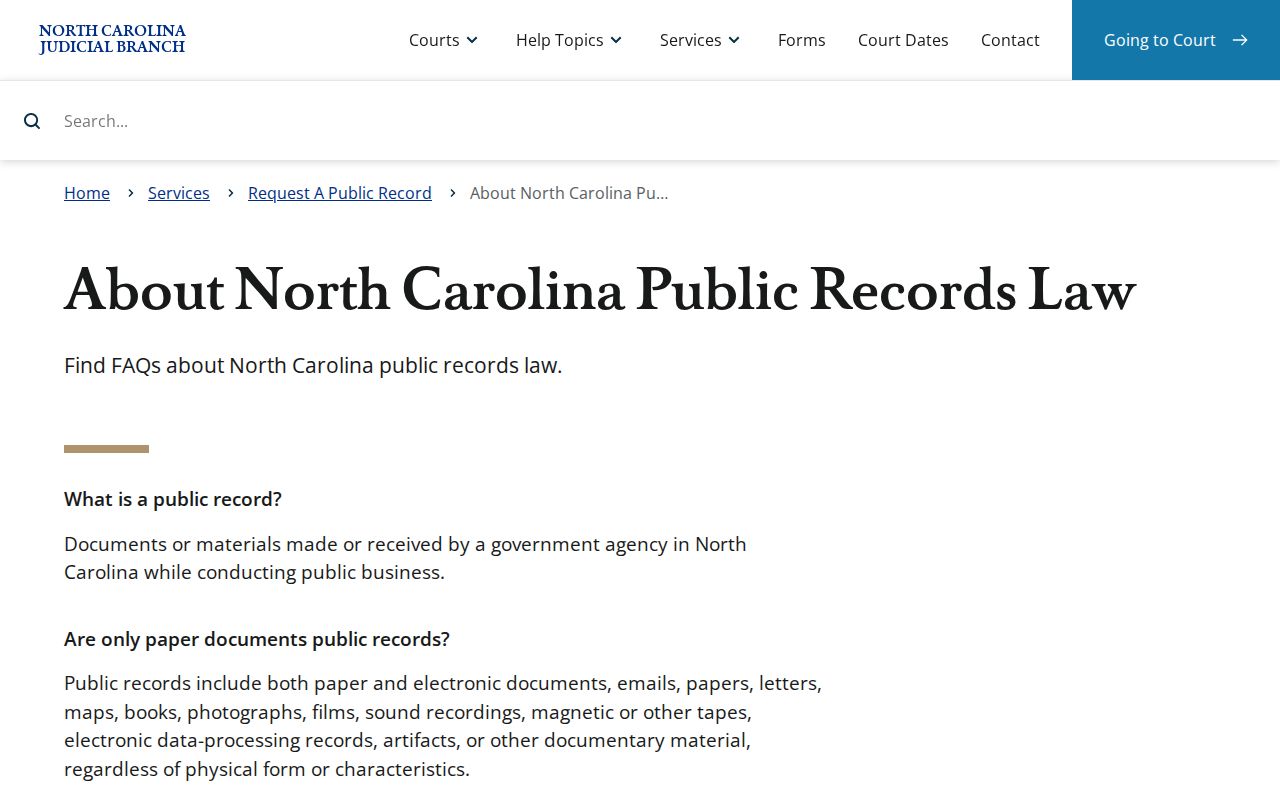
That access rule makes the custodian and the specific existing record more important than a broad people-search claim.
Durham Court and Vital Routes
The North Carolina eCourts Portal can search statewide Odyssey case data by party name or case number, but a no-match can reflect format, coverage, or a restricted case. The Register of Actions is a summary, not the official file. The Durham Clerk has the county file, public terminal, paper-file route, and certified-copy authority.
Vital records use another access map. North Carolina Vital Records covers births from 1913, deaths from 1930, marriages from 1962, and divorces from 1958, with older material routed to the appropriate Register of Deeds, clerk, or State Archives source. State searches cost $24 per three-year period. Certified copies have relationship, identity, and record-type rules. Durham Public Health does not issue certificates and directs local certificate questions to the Register of Deeds.
Visit North Carolina Vital Records research for the order and older-custody options.
The court Portal is useful for locating a public case reference, while the clerk remains the Durham file custodian.
The state vital-records research page explains the separate certificate and archival routes.
Those eligibility rules mean a vital index or announcement is not interchangeable with a certified record.
Historical Durham Residents Directories
Durham County Library’s North Carolina Collection holds annual city and county directories back to 1903, with some late nineteenth-century volumes from 1892. It also has telephone directories from 1927 and from 1950 through 2016, plus Greater Durham Area Cross Reference directories from 1962 to the present. DigitalNC places Durham items in a broader 1875 to 1963 city-directory collection.
A directory is a dated printed clue. It can preserve a name, address, occupation, household notation, or telephone marker in the edition that printed it. It cannot establish present residence or ownership. The street section generally begins around the 1919/20 volumes, so older address work should also use alphabetical listings, deeds, maps, newspapers, or a Sanborn sheet.
- Parcel
- A tax and mapping unit used to identify land.
- Index
- A finding tool that points to a record, not always the record image.
- Criss-cross directory
- A reverse address and telephone reference used for a dated clue.
- Grantor and grantee
- The parties who convey and receive an interest in a recorded instrument.
Note: Save the directory year, publisher, page, section, and spelling before comparing it with a deed or map.
Durham Library and Map Collections
The North Carolina Collection is on the third floor of Main Library at 300 N Roxboro Street. It provides local directories, obituary and newspaper indexes, maps, yearbooks, biography files, microfilm, and research help. Its obituary index covers 1848 through 1927, while its birth, marriage, and divorce announcement indexes reach from the 1800s to 1911. Non-digital material may require an in-person visit or a materials request.
Durham’s map sources add place context. Library large-materials resources point to maps, aerials, plats, and Urban Renewal material. The Library of Congress collection includes Durham Sanborn sheets from 1884 to 1950, including a 21-sheet 1907 set. A Sanborn map can show a footprint or use at a specific time, not a roster of occupants.
The library genealogy page is an official starting point for archival work.
Durham’s court contact route is a useful reminder that an index and the original custodian are different access layers.
Durham Record Comparisons
Official sources and commercial people-search categories do not do the same job. An official parcel card identifies a tax record and its source date. A deed provides a recorded transaction and legal description. A historical directory gives a published snapshot. Commercial sources may mix public and purchased data, but they can be stale, merged, or wrong, and they cannot bypass sealed, confidential, or protected records.
| Source type | Best use | Important limit |
|---|---|---|
| Official record | Verify an item held by its custodian | Coverage and redactions vary |
| Historical collection | Place a name or address in time | Needs source-date context |
| Commercial search category | May suggest a lead | Not a substitute for the custodian record |
Durham Record History Matters
Durham County formed from Wake and Orange counties in 1881, with additional Wake land transferred in 1911. That history changes the first office to check for an early deed or address. A place named Durham may predate the county books, and the proper predecessor-county record depends on where the land lay at the time.
Digital Durham changed access in July 2025 when its platform migrated. It added indexed letters and ledger material, but the former interactive 1880 census database is no longer archived there. Preserve the collection title and current link instead of relying on an older search path.
Use Durham County history to confirm the county timeline before treating an early record gap as final. The same caution applies to historic directories and maps. A street can keep a familiar name while its number, county custody, or nearby parcel pattern changes. Preserve the old label first, then compare it with the current map and the appropriate predecessor-office record. This approach makes an uncertainty visible instead of forcing a false match.
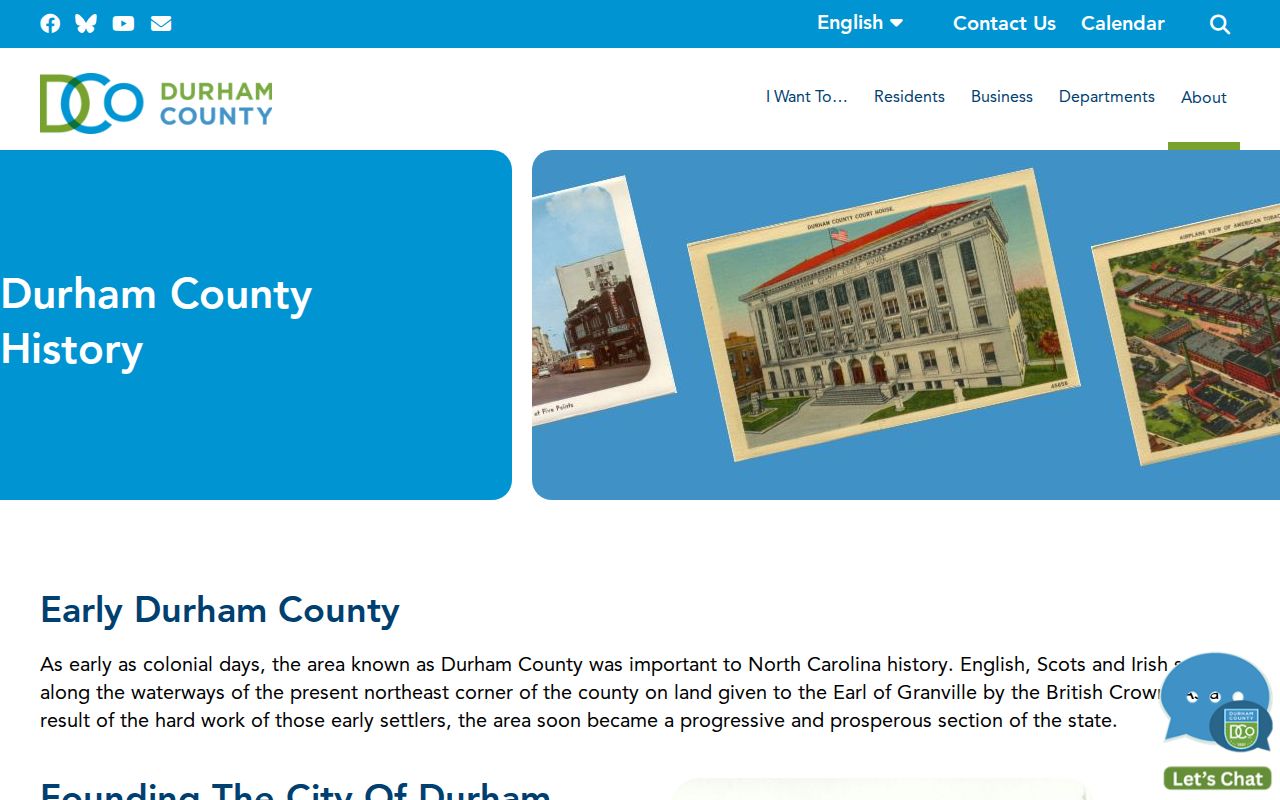
The 1881 formation date is a practical research boundary, not just local history.
Durham License and Entity Checks
A name in a business or credential record should be read by its role. The Secretary of State business search can show an entity, filing status, SOSID, registered agent, and documents. North Carolina BOLD is a cross-agency discovery tool for license types and issuing-agency information. A filing or license can corroborate a public role, but it does not prove a person’s present address or current activity.
Durham assumed-name material can involve state and local filing routes. Preserve the entity name, filing date, document reference, and capacity shown instead of turning an agent or organizer listing into a resident claim.
Open NC BOLD to identify the appropriate issuing board before relying on a credential result.
Using the issuing board after an NCBOLD result keeps the verification with the office that controls the license record.